Six Contractor Pricing Models and How to Pick One

Six Contractor Pricing Models and How to Pick One
Six pricing models cover almost every job you’ll ever quote: fixed-price (lump sum), time and materials (T&M), unit-price, cost-plus, guaranteed maximum price (GMP), and milestone or hybrid billing. Pick among them with one rule: the tighter you can define the scope, and the more repeatable the work, the more risk you can safely absorb yourself with a fixed number. When scope is fuzzy or conditions are unknown, push that risk back onto a T&M or cost-plus structure instead.
This article gives you the client-ready wording for each model, the billing mechanics behind it, and a decision flow you can run through before you ever open a quoting app. What you’ll walk away with:
- A one-line quote phrase for each of the six models
- A risk map showing who eats an overrun under each structure
- A short checklist for what every quote needs before it goes out
Key Takeaways
Matching the pricing model to scope certainty and repeatability, then documenting risk allocation in writing, is what protects contractor margin on every job.
| Point | Details |
|---|---|
| Match model to certainty | Use fixed-price only when scope is fully documented; switch to T&M when unknowns exist. |
| Protect margin with milestones | Tie payments to physical checkpoints, not calendar dates, to avoid disputes. |
| Cap risk with GMP | Offer a guaranteed maximum price when a client wants cost-plus flexibility with budget certainty. |
| Build trust into the quote | Add a two-sentence credentials line and a 30-day validity period to every quote. |
| Speed up conversion | Quote-lock lets you send branded quotes, track views, and convert acceptances into invoices in one click. |
Table of Contents
- Types of Contractor Pricing Models and How Each One Bills
- How Do You Choose the Right Pricing Model for a Job?
- What Belongs in a Client-Ready Quote
- Quote Faster and Stop Chasing Payment
- Sources
Types of Contractor Pricing Models and How Each One Bills
Each model answers the same two questions differently: who carries the risk if the job runs long, and how often money changes hands. Here’s the breakdown.
Fixed-price (lump sum) means one number, agreed before work starts, covering the full defined scope. It fits jobs where you can walk the site, spec the materials, and see everything that needs doing. Fixed-price shifts overrun risk to the contractor, so your margin depends entirely on how tight your takeoff was. Protect it with a deposit (commonly a portion of the total price), a milestone schedule tied to phases, and a written allowance for anything hidden.
Time and materials bills actual hours plus materials, typically with a markup on materials to cover handling. It suits remodels, repairs, or anything where you won’t know what you’re dealing with until walls come open. Log hours daily, keep receipts, and invoice weekly or biweekly rather than waiting until the job wraps. T&M shifts cost uncertainty onto the client, which is exactly why it needs a not-to-exceed estimate or the client will balk at the first invoice.
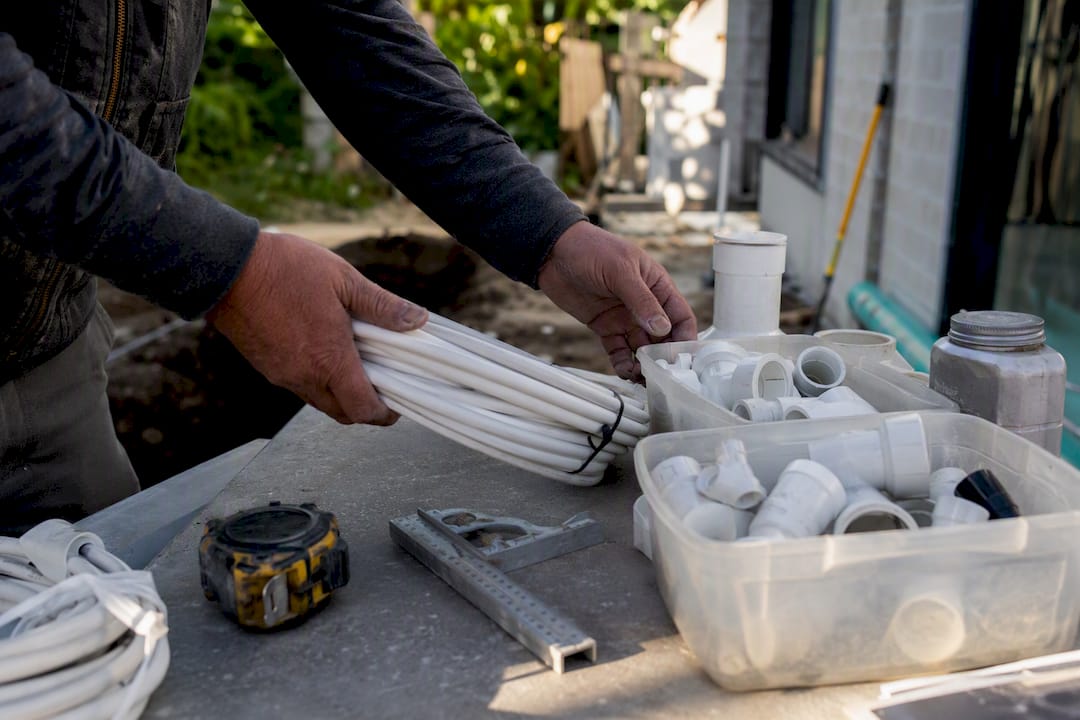
Unit-price charges per measured unit, per square foot of flooring, per linear foot of fence, per cubic yard of concrete. It works best for repeatable, measurable work where quantities might shift once you’re on site. Invoice against actual measured quantities at closeout, not the original estimate, and note that variance in writing. Quote line: “$4.50 per square foot of sod installed, final invoice based on measured coverage.”
Cost-plus reimburses your documented costs and adds a fee, either a flat percentage (often 10 to 20%) or a fixed dollar amount agreed up front. This structure suits large or complex builds where nobody can price the whole job accurately at the start, and it demands airtight record-keeping on every reimbursable expense. Quote line: “Cost of labor and materials plus a 15% management fee, itemized monthly.”
Guaranteed maximum price caps the client’s exposure while you still bill actual costs underneath that ceiling. It’s a middle ground: offer it when a client wants cost-plus flexibility but needs budget certainty, and consider a shared-savings clause (often splitting savings between contractor and client) to keep your incentives aligned with theirs. Quote line: “Cost-plus billing not to exceed $42,000; savings under that cap split 50/50.”
- Fixed-price for defined scope
- T&M for unknowns
- Unit-price for repeatable measured work
- Cost-plus for large, complex builds
- GMP when the client needs a ceiling
- Hybrid when a job spans more than one of the above
Milestone and hybrid billing isn’t a separate pricing philosophy so much as a delivery mechanism, and it’s often layered on top of any model above. Split payments at defined phases (design, rough-in, finish) rather than one lump sum at the end, and keep each milestone tied to a specific, inspectable deliverable so nobody argues about whether it’s “done.”
Pro Tip: Write your milestone triggers as physical checkpoints (“drywall hung and taped”) rather than dates. Dates slip. Finished drywall doesn’t lie.
How Do You Choose the Right Pricing Model for a Job?
Run through six criteria before you commit to a structure: how clear the scope is, how much unknown risk sits behind walls or underground, whether the work repeats, how firm the client’s budget is, your timeline, and any permit or inspection exposure that could stall progress.
Before you price anything, ask the client and the site a few pointed questions:
- Have materials and finishes already been selected, or are they still deciding?
- Is there full access, or will scaffolding, occupied space, or utilities complicate the work?
- What’s actually behind that wall, under that slab, or above that ceiling?
- Do you need permits or third-party approvals before work can start?
Red flags that should push you off fixed-price and onto T&M: a client who can’t answer the questions above, an older building with unknown wiring or plumbing, or any scope description that includes the word “probably.” When in doubt, price the known parts fixed and put the unknown parts on hourly with a stated range. A decision framework matched to project complexity can help formalize this for larger jobs.
The flow, condensed: scope is clear and documented, quote fixed-price. Scope is uncertain, quote T&M. Work is repeatable and measurable, quote unit-price. Job is large, complex, or multi-phase, quote cost-plus or GMP. Job has parts of everything, quote hybrid.
What Belongs in a Client-Ready Quote
A quote that wins the job and protects you afterward needs the same core pieces regardless of which pricing model you’re using.
- Scope of work, written specifically enough that a stranger could read it and know exactly what’s included.
- Exclusions, stated explicitly, since anything not written down becomes a dispute later.
- Materials versus labor breakdown, optional but useful for cost-plus and T&M transparency.
- Validity period, 30 days is a commonly recommended validity period (https://spannerbot.com/quoting-software/how-to-write-a-quote-as-a-tradesman/) and protects you from material-price swings while giving the client time to decide.
- Deposit and payment terms, spelled out to the percentage and the trigger date.
- Change-order process, a one-line clause stating that extras require signed approval before you start them.
A short “why choose us” line, two sentences on your experience or licensing near your contact details, measurably improves how much a quote is trusted. Combine that with online acceptance and automatic view tracking, since faster follow-up closes more jobs than chasing a client by phone three days later.
Pro Tip: Put your license number and years in trade directly under your business name on the quote header. It’s the first thing a skeptical homeowner scans for.
Three Hybrid Pricing Examples You Can Copy
- Renovation: fixed-price for the documented scope (cabinets, countertops, flooring) plus T&M for anything found once walls or ceilings open up.
- Landscaping: unit-price per square foot of turf or paving, plus a flat labor setup charge for grading and site prep.
- Fabrication: per-unit part pricing plus a one-time setup fee and a lead-time deposit before production starts, an approach that fits shops using a unit-price structure for repeatable orders.
What actually moves the needle on margin
Choosing the right model matters more than most contractors think it does. A remodel that gets quoted fixed-price when it should have been T&M isn’t a pricing mistake, it’s a margin killer that shows up three weeks in when the walls come open. Splitting a scope into a fixed chunk for what’s known and an hourly chunk for what isn’t, backed by daily timesheets and photo-logged receipts, cuts disputes dramatically. Quoting software that lets you send a professional quote in minutes, track when a client opens it, and convert an accepted quote straight into an invoice removes most of the friction that causes contractors to undercharge just to close the deal faster.
— Robert
Quote Faster and Stop Chasing Payment
Quote-lock turns the model you just picked into a sendable quote in minutes, no client login, no software training, and no guessing whether your invoice matches what you quoted. Build a fixed-price, T&M, or unit-rate quote from a branded template, send it, and see the moment your client opens it.
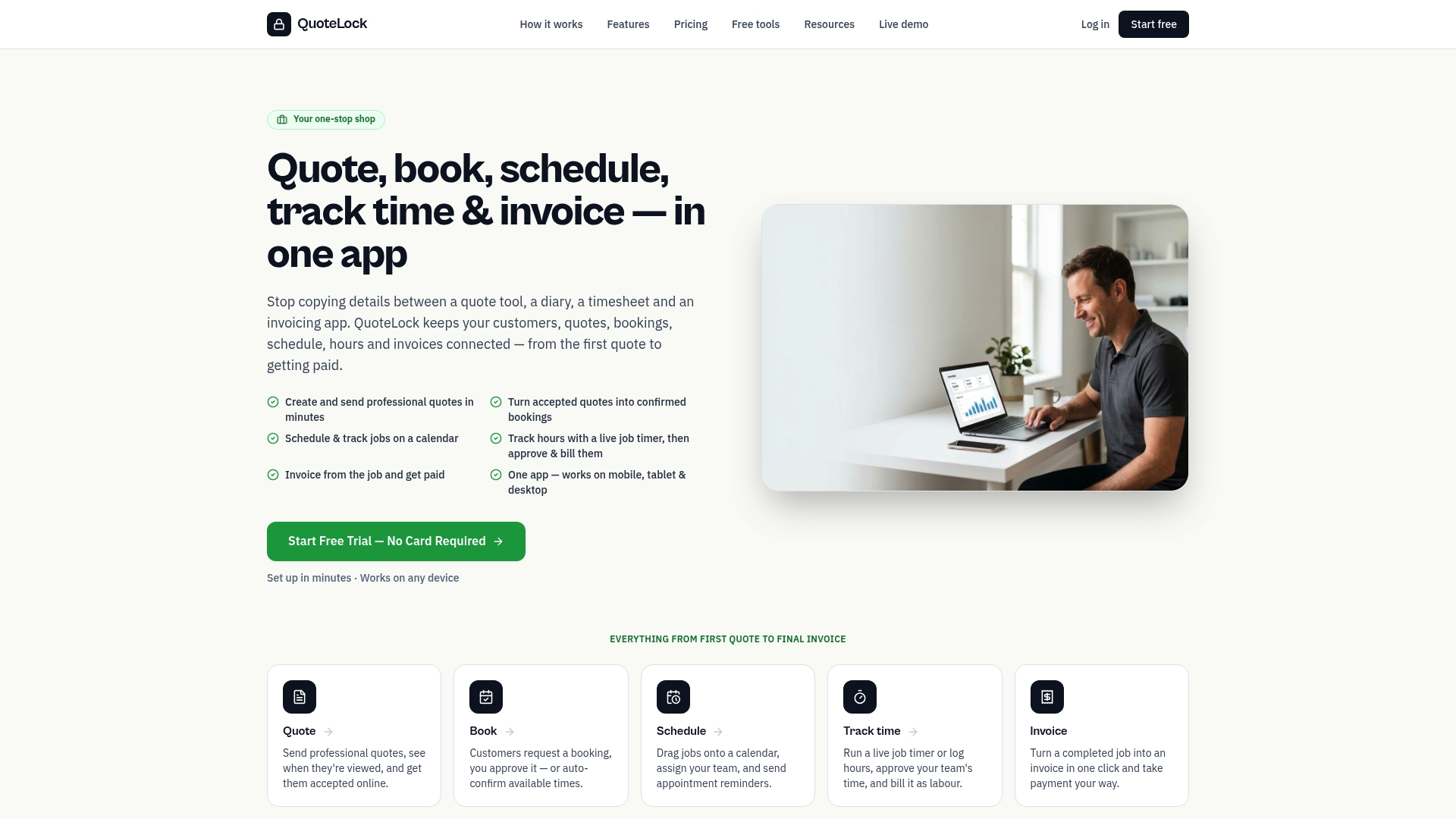
It fits builders juggling milestone billing, landscapers running unit pricing by the square foot, and fabrication shops quoting per part plus a setup fee. Once a client accepts, one click turns that quote into an invoice, with deposit links and automatic reminders built in so you’re not the one following up by text three days later. If you’ve been losing jobs to slow turnaround or losing margin to sloppy tracking, start a trial of Quote-lock’s quoting software and send your next quote before the job goes cold.
Sources
- Time and materials vs fixed fee
- Construction Contract Payment Methods: Fixed Price, Cost-Plus, and GMP
- How to write an about us page that actually converts