What Does a Quote Read Receipt Mean in B2B?

What Does a Quote Read Receipt Mean in B2B?
A B2B quote read receipt is a digital notification that confirms a recipient has opened or viewed a quote document, giving the sender visibility into buyer engagement without requiring a phone call or follow-up email. Understanding what this signal means, and what it does not mean, is one of the most practical skills a sales or procurement professional can develop. The term “read receipt” comes from standard email protocols, but in B2B quoting, the more precise industry term is quote view tracking, which operates through dedicated portals rather than basic email clients. Knowing what does quote read receipt mean in B2B separates teams that follow up with purpose from those that follow up blind.
What does a quote read receipt mean in B2B?
A quote read receipt confirms one thing: the document was opened. It does not confirm that the buyer read every line, shared it internally, or intends to move forward. That distinction matters more than most sales teams realize.
The viewed status versus acknowledged status gap is where deals get lost. A “viewed” status means the file was accessed. An “acknowledged” status requires the recipient to take an explicit action, such as clicking a confirmation button or responding directly. Acknowledgment is a stronger engagement signal and sits closer to a buying intent indicator, though it is still not a legally binding acceptance.

Read receipts serve an operational purpose, not a contractual one. They confirm the file was opened, not that stakeholders approved it or that the buyer intends to proceed. Treating a view notification as a green light to push for a close is one of the most common mistakes in B2B sales.
How do B2B quote read receipts technically work?
Standard email read receipts rely on Message Disposition Notification (MDN), a protocol built into most email clients including Microsoft Outlook and Gmail. The problem is that MDN requires recipient consent. Recipients can decline the request, and many corporate IT policies block these notifications entirely. That makes standard email read receipts unreliable for professional quoting.
Dedicated quote portals solve this problem differently. Instead of asking for permission, they track access through a deliberate user action, such as clicking a secure link to open the document. Portal-based tracking achieves success rates over 90%, vastly outperforming email pixels or MDN requests. That reliability gap is why experienced sales teams prefer portal tracking for high-value quotes.
Pro Tip: Never rely on email read receipts alone for quotes above a certain dollar threshold. Use a portal-based system that logs access with a timestamp and IP confirmation.
The table below compares the two main methods:
| Method | Reliability | Requires consent | Best use case |
|---|---|---|---|
| Email MDN (Outlook, Gmail) | Low | Yes | Low-stakes internal communications |
| Dedicated quote portal | High (90%+) | No | B2B sales quotes, high-value proposals |
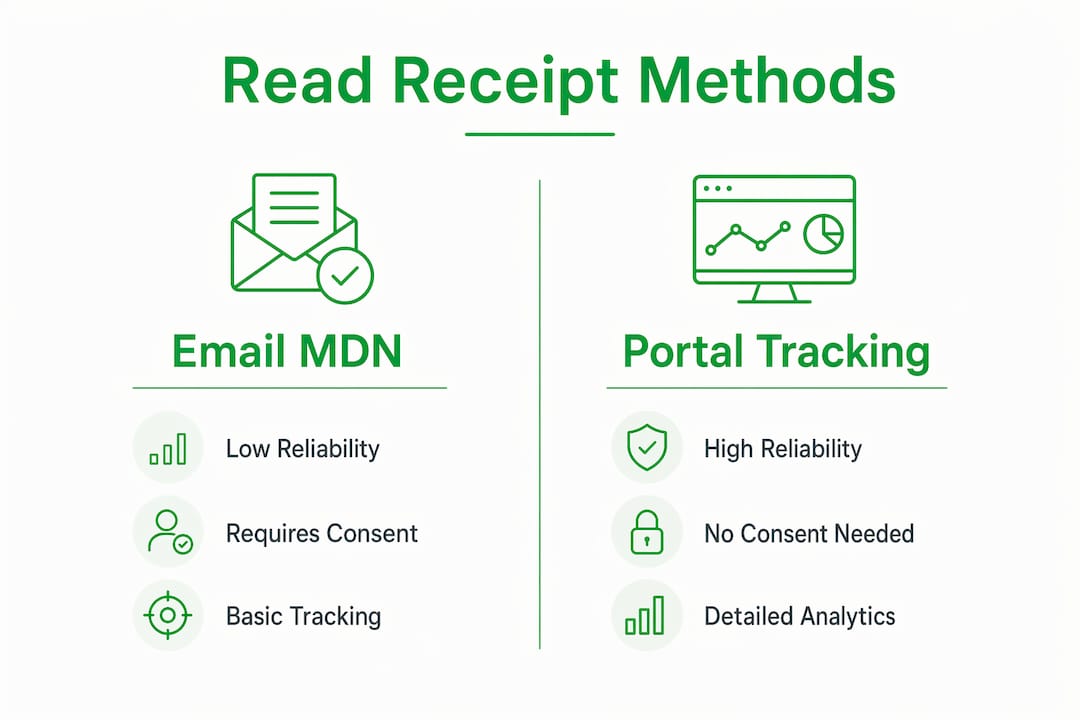
Portal tracking also captures richer data. You can see how many times a quote was opened, on what device, and at what time of day. That context helps you time follow-up calls when the buyer is actively engaged.
What does a read receipt actually tell you in procurement and sales?
A read receipt tells you the quote reached someone. It does not tell you who read it, whether it was forwarded to the decision-maker, or whether the buyer has any interest in proceeding. Sales teams that confuse activity with intent waste time chasing cold leads.
The B2B buying process rarely involves a single decision-maker. A procurement manager might open a quote and immediately forward it to a finance director, a technical lead, and a legal reviewer. Your read receipt fires once. The internal review process that follows is invisible to you unless your quote is built to travel well inside the buyer’s organization.
“Quotes are live transaction states. Sales professionals must optimize for the internal approval process to prevent bottlenecks, with read receipts highlighting stalls but not solving them alone.”
61% of B2B leads passed to sales teams are never converted. That figure reflects how often engagement signals like quote views are mistaken for buying intent. A view is the beginning of a conversation, not the end of one.
Here is what a quote read receipt reliably tells you, and what it does not:
- It tells you: The quote was delivered and opened.
- It tells you: Roughly when the buyer first engaged with the document.
- It does not tell you: Whether the right stakeholder saw it.
- It does not tell you: Whether the price, scope, or terms were acceptable.
- It does not tell you: Whether the buyer intends to respond or proceed.
Using read receipt data as a lead qualifier works best when combined with response time. Prospects who acknowledge a quote within 12 hours show a significantly higher conversion rate than those who go silent. Silence within 12 to 48 hours after a view is a reliable signal to adjust your follow-up strategy, not to wait.
How to use quote read receipts to improve sales follow-up
The single biggest practical benefit of B2B read receipts is eliminating the “did you get my quote?” call. That call wastes time and signals to the buyer that you lack confidence. When you know the quote was opened, you skip that step and open with something substantive.
Here is a practical follow-up sequence built around read receipt data:
- Quote sent, no view after 24 hours. Send a brief check-in to confirm delivery. Keep it one sentence.
- Quote viewed, no response after 48 hours. Call or email with a specific question about the scope or timeline. Do not ask if they received it.
- Quote viewed multiple times, no response. This pattern often means internal review is happening. Ask directly whether they need a version formatted for internal sharing.
- Quote viewed once, then silence for 5+ days. Adjust your qualification approach and consider whether this lead meets your conversion criteria.
- Quote acknowledged or responded to within 12 hours. Prioritize this lead immediately. Responsiveness at this stage correlates strongly with conversion.
Quotes optimized for internal sharing with clear next steps reduce quote silence and help identify when a deal stalls in internal review. A quote that is hard to forward or difficult to read on mobile creates friction inside the buyer’s organization. That friction shows up as silence on your end.
Pro Tip: Include a one-page summary at the top of every quote. Buyers who forward documents internally rarely send the full version. A summary page travels further and keeps your pricing and scope visible to decision-makers who never open the original.
Read receipts work best when reserved for high-value communications rather than routine correspondence. Using them on every quote you send dilutes their value and can signal to buyers that you are monitoring them too closely.
What are the common pitfalls with quote read receipts in B2B?
The biggest social risk with read receipts is the perception of surveillance. In B2B relationships, trust is a currency. Routine use of read receipts can signal distrust and micromanagement, damaging professional relationships and delaying the relationship-building that closes deals.
Technical false positives are also a real problem. Email preview panes, spam filters, and automated security scanners can trigger a read receipt without any human ever seeing the document. This is another reason why portal-based tracking, which requires a deliberate click, produces more reliable data than email pixels.
Shared inboxes create a separate complication. In procurement departments, a single email address is often monitored by multiple people. A read receipt fires when anyone on that team opens the message. You may think the procurement director reviewed your quote when it was actually an assistant doing an inbox sweep.
Common pitfalls to watch for:
- False positives from email scanners. Security tools in corporate environments frequently open attachments automatically.
- Shared inbox ambiguity. You cannot confirm which individual opened the quote.
- Recipient suppression. Many professionals decline read receipt requests as a matter of policy.
- Overuse damaging trust. Sending read receipt requests on every quote signals anxiety, not professionalism.
- Misreading silence as disinterest. A quote viewed and not responded to is often stuck in internal review, not rejected.
The mitigation for most of these issues is the same: use portal-based quote tracking instead of email-level receipts. Portals require intentional access, reduce false positives, and give you richer engagement data without putting the recipient in an uncomfortable position.
Key takeaways
A quote read receipt confirms document access, not buyer intent. The most reliable tracking comes from dedicated portals, not standard email MDN protocols.
| Point | Details |
|---|---|
| Read receipts confirm access only | A viewed quote is not an approved quote or a buying signal. |
| Portal tracking outperforms email MDN | Dedicated portals achieve over 90% reliability versus opt-in email receipts. |
| Response time qualifies leads | Prospects who acknowledge a quote within 12 hours convert at significantly higher rates. |
| Overuse damages relationships | Reserve read receipts for high-stakes quotes to avoid signaling distrust. |
| Quote design affects internal review | Quotes built for easy sharing reduce silence and surface stalled deals faster. |
Why read receipts changed how I think about follow-up
The first time I saw a quote opened seven times in three days with zero response, I almost picked up the phone to push for a close. That would have been the wrong move. What was actually happening was an internal review cycle where the original contact was building a case to their finance team. The silence was not rejection. It was process.
That experience taught me something most sales training misses: read receipts are a window into buyer behavior, not a trigger for action. The data tells you when to be patient and when to be concerned. A quote opened once and never revisited after 72 hours is a different situation from one opened repeatedly across multiple sessions.
Portal-based tracking changed my follow-up quality more than any CRM feature I have used. Knowing that a builder or landscaper opened a quote on a Tuesday evening told me they were reviewing it after hours, probably comparing it against another proposal. That context shaped every word of my follow-up. I stopped asking “did you get a chance to look at it?” and started asking “did the scope cover everything you needed?”
The professionals who get the most value from quote view tracking are the ones who treat it as context, not confirmation. Combine it with a well-structured quote that travels well internally, and you will close more deals with fewer awkward check-in calls.
— Robert
Quote-lock gives contractors real tracking, not guesswork
Contractors and service businesses lose jobs every week because they have no idea whether a prospect ever opened their quote.
Quote-lock solves that with built-in quote view tracking that shows you exactly when a client opens your quote, no email MDN requests, no client logins, and no technical setup required. Whether you are a plumber chasing a commercial job or a builder managing multiple proposals at once, Quote-lock gives you the visibility to follow up with confidence instead of guessing. Create a quote in minutes, track when it gets opened, and convert accepted quotes directly into invoices. The whole process runs from your phone.
FAQ
What is a quote read receipt in B2B?
A B2B quote read receipt is a digital notification that tells the sender when a recipient has opened or viewed a quote document. It confirms delivery and access, but not approval or intent to buy.
Are email read receipts reliable for B2B quotes?
Standard email read receipts rely on MDN protocols and require recipient consent, making them unreliable. Many corporate email clients block or decline these requests automatically.
Does a read receipt mean the buyer is interested?
A read receipt means the document was opened. It does not confirm that the buyer reviewed the terms, shared it internally, or intends to respond. Response time after viewing is a stronger indicator of interest.
How should I follow up after a quote is viewed?
Skip the “did you get my quote?” call and open with a specific question about scope, timeline, or next steps. If the quote was viewed multiple times with no response, ask whether the buyer needs a version formatted for internal sharing.
What is the difference between viewed and acknowledged status?
Viewed status means the file was opened. Acknowledged status means the recipient took an explicit action to confirm receipt, such as clicking a confirmation button. Acknowledgment is a stronger engagement signal but is still not a legally binding acceptance.