How Event Quote to Contract Works: A Planner's Guide

How Event Quote to Contract Works: A Planner’s Guide
The event quote to contract process is the structured sequence that moves a pricing proposal into a legally binding agreement, securing the booking for both planner and client. Most event planners treat the quote as the finish line. It is actually the starting line. A quote outlines what you will deliver and at what price. A contract locks in the legal terms that protect everyone when things go sideways. Standard practice holds a requested date for 7 days after sending a quote, then requires a signed contract and a 50% deposit to confirm the booking. That sequence is not arbitrary. It is the professional standard that separates protected businesses from exposed ones.
How does the event quote to contract process work?
The event contract process moves through three distinct stages: quote, contract, then deposit. Each stage has a specific job, and skipping any one of them creates legal and financial risk.
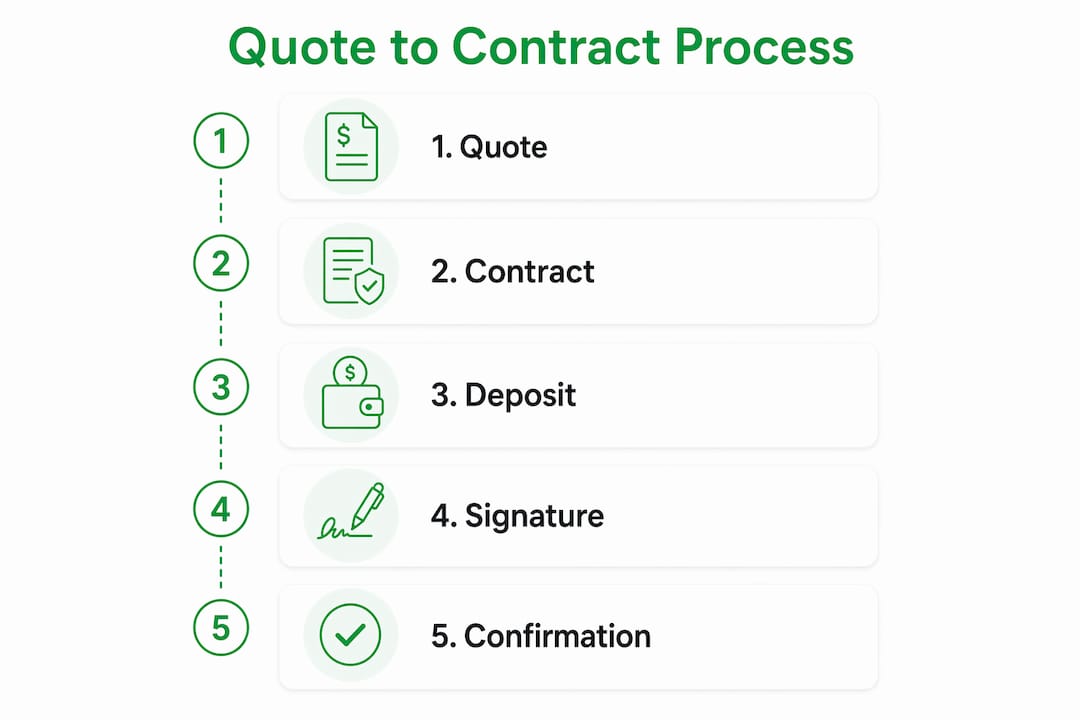
A quote is a commercial offer. It tells the client what services you will provide, what each item costs, and what the total comes to. It is not a binding document. A client can walk away from a quote without penalty, and so can you. The quote exists to start the conversation and align expectations on scope and price.

A contract is a legal document. It transforms the agreed scope and price from the quote into enforceable obligations. Legal experts stress that all deal terms must be consolidated into one signed contract before any money or work changes hands. That is the point where both parties are bound.
The deposit follows the signed contract, never the other way around. Requesting a deposit before the contract is signed breaks the legal sequence and weakens your position if a dispute arises. Quote first. Contract second. Deposit third. That order is non-negotiable in professional event management.
What is the difference between an event quote and an event contract?
Event planners frequently lose money because they blur the line between these two documents. Understanding the difference is the foundation of every successful booking.
What a quote covers:
- Itemized list of services and products
- Pricing per line item and total cost
- Proposed event date, time, and location
- Basic scope of work (hours, headcount, equipment)
- Quote validity period (typically 7 days)
What a contract adds beyond the quote:
- Cancellation fees and refund conditions
- Force majeure clauses covering unforeseeable events
- Liability caps and indemnity terms
- Late payment penalties and payment schedule
- Dispute resolution process
- Staffing ratios and equipment responsibilities
- Change request procedures
Legal risk management belongs in the contract, not the quote. Mixing liability language into a quote creates confusion and can undermine the enforceability of both documents. Keep the quote clean and operational. Reserve the legal weight for the contract.
A common misconception is that a detailed quote is “basically a contract.” It is not. Without the clauses listed above, you have no recourse if a client cancels the week before the event, refuses final payment, or demands services outside the original scope.
What key components must an event contract include beyond the quote?
A signed contract without the right clauses is nearly as risky as no contract at all. Event contracts must include cancellation penalties, force majeure terms, liability caps, staffing ratios, equipment responsibilities, and late payment penalties as standard.
-
Cancellation and termination terms. Define what happens if the client cancels at 90 days, 30 days, or 7 days out. Specify whether deposits are refundable and under what conditions. A sliding scale of cancellation fees protects your revenue as the event date approaches.
-
Force majeure clause. Cover events outside either party’s control: natural disasters, government restrictions, venue closures. Without this clause, you may owe a full refund for circumstances you could not prevent.
-
Payment schedule and late penalties. State the deposit amount, the due date for the balance, and the penalty for late payment. A flat late fee or a percentage per week both work. The key is that the contract specifies the consequence.
-
Scope of work and change requests. Define exactly what is included. Then define the process for requesting changes. Scope creep is the most common source of conflict in event planning. A written change request process stops it before it starts.
-
Liability limits and indemnity. Cap your financial exposure. Specify what you are and are not responsible for if equipment fails, a vendor cancels, or a guest is injured. Indemnity clauses protect you from being held liable for events outside your control.
-
Dispute resolution. Specify whether disputes go to mediation, arbitration, or court. Naming the jurisdiction saves both parties time and money if a disagreement escalates.
Pro Tip: Send the contract within 24 hours of the client verbally accepting the quote. The longer you wait, the more likely the client is to reconsider or shop around. Speed signals professionalism.
How can negotiation and collaboration improve the quote to contract process?
Price is rarely the only thing worth negotiating. Effective contract negotiation covers itemized deliverables, contract term lengths, and value-added services. Planners who negotiate only on price leave significant protection on the table.
Common negotiation points event planners overlook:
- Contract duration and renewal terms for recurring events
- Exclusivity clauses preventing vendors from working competing events on the same date
- Value-added services such as setup, breakdown, or additional staff hours
- Intellectual property rights for photography, video, or branded content
- Revision limits for creative deliverables like design or entertainment setlists
Transparency in the quote stage makes negotiation easier. An itemized proposal lets the client see exactly what they are paying for. When a client wants to reduce cost, you can remove line items rather than discount the whole package. That protects your margin and keeps the scope honest.
Scope creep is the silent profit killer in event planning. Clear contract language defining what is included and what triggers a change order is the only reliable defense. Verbal agreements made during planning meetings are not enforceable. Every scope change should go through a written amendment to the contract.
Involving vendors in the negotiation process also matters. If you are coordinating multiple vendors for a single event, align their contracts with your master agreement. Conflicting cancellation terms between your client contract and your vendor contracts create a gap where you absorb the financial loss.
What role does automation play in converting event quotes to contracts?
The biggest reason quotes fail to convert is not price. The quality of the experience between quote and contract is the primary conversion driver. A slow, friction-heavy process loses clients who were ready to sign.
The print-sign-scan workflow is a conversion killer. Asking a client to print a PDF, sign it by hand, scan it, and email it back adds unnecessary steps. Each step is a point where the client can disengage. Mobile-friendly digital signing, where the client reviews and signs in one continuous flow, removes that friction entirely.
| Workflow type | Steps to signature | Error risk | Client experience |
|---|---|---|---|
| Print, sign, scan | 5+ steps | High (manual data entry) | Poor |
| Email PDF with e-sign link | 2–3 steps | Medium | Moderate |
| Automated quote-to-contract | 1–2 steps | Low (data inherited from quote) | Strong |
Automated quote-to-contract systems transfer pricing and term data directly from the approved quote into the contract, reducing manual entry and the errors that come with it. The contract is pre-populated the moment the client accepts the quote. That speed matters. A client who accepts a quote on a Tuesday and receives a contract on Friday has had three days to second-guess the decision.
Real-time tracking also changes the dynamic. Knowing when a client has opened the contract and how long they spent reviewing it lets you time follow-up precisely. A reminder sent 24 hours after the client first opened the contract is far more effective than a generic follow-up email sent on a schedule.
Pro Tip: Set an automatic reminder to fire 48 hours after the contract is sent if it has not been signed. Most unsigned contracts are not rejections. They are forgotten tasks on a busy client’s to-do list.
Key takeaways
The event quote to contract process requires a strict sequence: quote, signed contract, then deposit, with each stage serving a distinct legal and operational purpose.
| Point | Details |
|---|---|
| Quote vs. contract distinction | A quote is a commercial offer; a contract is the legally binding document that follows acceptance. |
| Strict sequencing | Always collect the signed contract before requesting a deposit to maintain legal protection. |
| Essential contract clauses | Include cancellation terms, force majeure, liability caps, and a change request process in every contract. |
| Negotiation depth | Negotiate deliverables, exclusivity, and value-added services, not just price, for stronger agreements. |
| Automation speeds conversion | Pre-populated contracts and mobile-friendly signing reduce friction and increase acceptance rates. |
Why I think most event planners get this process backwards
Most event planners I have observed put enormous effort into the quote and almost none into the contract. They spend hours crafting a beautiful proposal with detailed pricing, then send a generic contract template they downloaded years ago and never updated. That imbalance is where deals fall apart and where money gets lost.
The quote is a sales document. The contract is a protection document. Treating them as the same thing, or letting the contract feel like an afterthought, signals to clients that your process is informal. Informal processes invite informal behavior. Clients who sense looseness in your paperwork are more likely to push back on scope, delay payment, or walk away without penalty because they sense there is no real consequence.
I have also seen planners collect deposits before the contract is signed, usually because the client seemed enthusiastic and the planner did not want to slow the momentum. That is a mistake. Enthusiasm does not equal legal commitment. A signed contract does. The deposit should feel like the natural conclusion of a clear process, not a workaround for an unsigned agreement.
The planners who close the most bookings are not the ones with the lowest prices. They are the ones with the clearest, fastest, most professional process from quote to signed contract. Clients do not want to negotiate. They want confidence. A well-structured contract process gives them that confidence and gives you the protection you need to deliver.
— Robert
Quote-lock makes the quote to contract process faster
Event planners who manage multiple bookings at once cannot afford to lose time on manual paperwork. Quote-lock is built for exactly that situation.
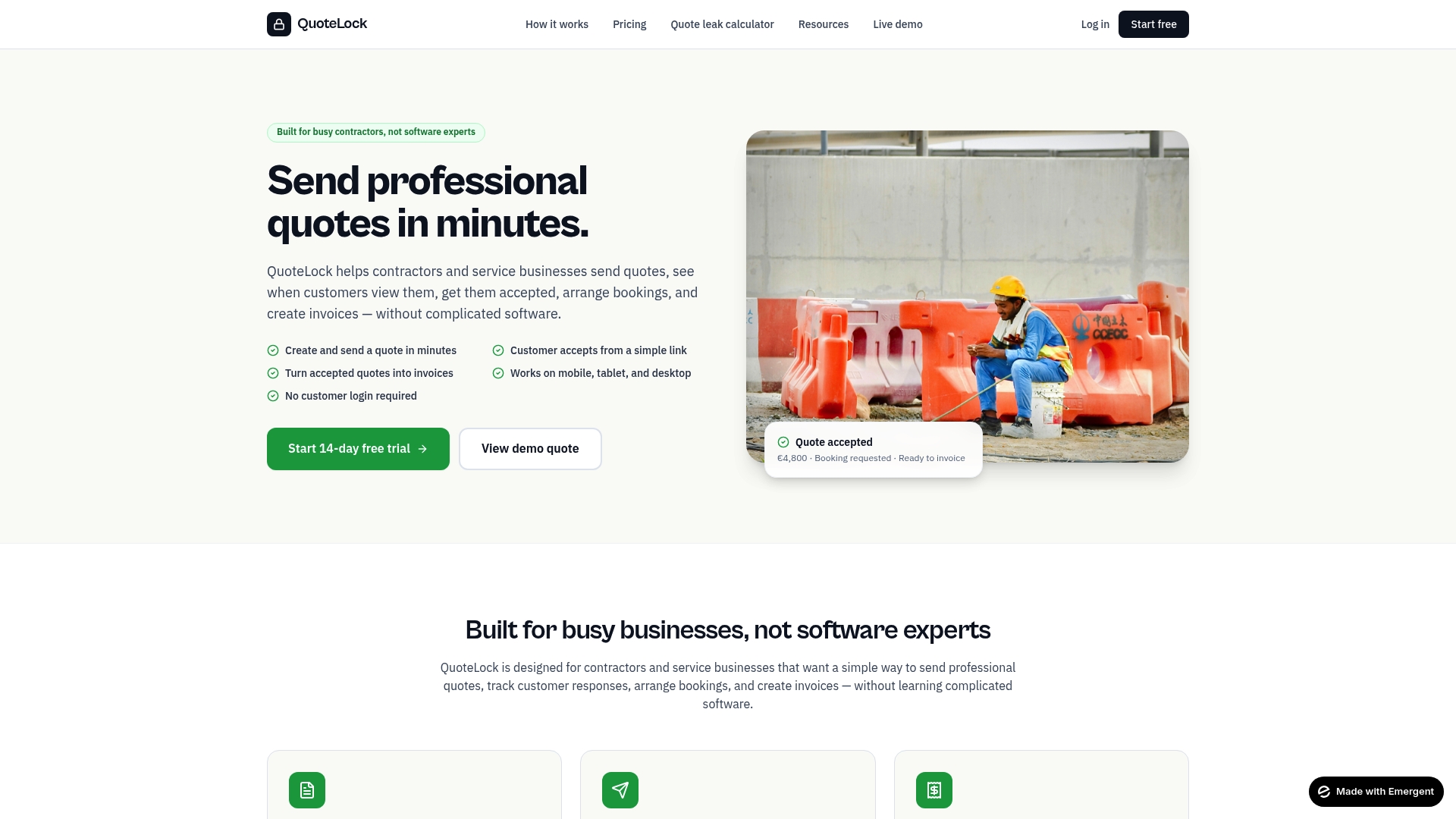
With Quote-lock, you create and send a quote in minutes. When the client accepts, the approved quote converts directly into the next step in your workflow, cutting out the manual data entry that causes errors and delays. Quote-lock tracks when clients view your quote, sends automatic reminders, and keeps the entire process moving without chasing emails. For event planners who want to close bookings faster and spend less time on admin, Quote-lock removes the friction that costs you signed contracts. No complex software. No client logins. Just a clear, professional process from first quote to confirmed booking.
FAQ
What is the difference between an event quote and a contract?
A quote is a non-binding pricing proposal that outlines services and costs. A contract is the legally enforceable document that follows client acceptance and includes cancellation terms, liability clauses, and payment conditions.
When should a deposit be collected in the event booking process?
A deposit should only be collected after the contract is fully signed by both parties. Collecting a deposit before signing breaks the legal sequence and weakens your position in a dispute.
What clauses must every event contract include?
Every event contract must include cancellation fees, a force majeure clause, liability limits, a payment schedule with late penalties, a scope of work definition, and a dispute resolution process.
How does automation improve quote to contract conversion?
Automated systems pre-populate contracts with data from the approved quote, eliminating manual entry errors. Mobile-friendly signing tools remove friction and increase the likelihood that clients complete the signing process quickly.
How long should an event planner hold a date after sending a quote?
Standard practice is to hold the requested date for 7 days after sending the quote. After that window, the date is released unless the client has signed the contract and paid the deposit.