Why Event Clients Request Multiple Quotes

Why Event Clients Request Multiple Quotes
Requesting multiple quotes is the single most effective strategy event clients use to reduce uncertainty, compare real value, and protect their budget before committing to a vendor. The practice, formally known as competitive bidding or multi-vendor solicitation, gives clients comparative data on price, scope, and risk that no single quote can provide. Over 70% of clients who request multiple quotes do so primarily to close the gap between initial interest and final commitment. That number reveals something vendors often miss: the process is about confidence, not just cost.
Why event clients request multiple quotes to find true value
Price is the most visible number in any event planning quote, but it is rarely the most important one. Quotes for identical event scopes can vary between 30% and 50% due to differences in overhead, insurance coverage, and risk assumptions. That variation does not mean one vendor is gouging and another is generous. It means each vendor has built a different operational model into their price.
A higher quote often reflects a more conservative event strategy. The vendor may have priced in backup equipment, crew redundancy, or contingency hours that a lower bidder simply left out. Quotes can differ by up to three times in price when one vendor includes full backup systems and another does not. That gap is not dishonesty. It is a difference in how each vendor plans to handle the unexpected.

Low bids deserve extra scrutiny. Extreme low bids often come from vendors without proper insurance or licensing, which shifts financial and legal risk directly onto the client. A bid that sits 30% or more below the market average is a red flag, not a bargain.
Here is what to look for when evaluating quotes beyond the bottom line:
- Insurance and licensing documentation: Ask every vendor to confirm coverage before you compare prices.
- Contingency planning: Does the quote address what happens if key equipment fails or a staff member does not show?
- Labor allocation: How many crew members are included, and for how many hours?
- Pre-production hours: Are planning calls, site visits, and rehearsals priced in or billed separately?
- Backup systems: Does the vendor carry redundant gear for critical event functions?
Pro Tip: Ask each vendor to walk you through their worst-case scenario plan. The quality of that answer tells you more about their reliability than the price on the page.
What is the optimal number of quotes for event planning?
The right number of quotes balances enough information to make a confident decision against the real cost of evaluating too many proposals. For most corporate event projects, soliciting 5–8 vendors and receiving 2–4 formal quotes provides enough competitive insight without overwhelming the decision process. That range gives clients a clear picture of market rates while keeping evaluation manageable.
Too few quotes leave clients without a reliable benchmark. One quote tells you what one vendor thinks the job is worth. Two quotes show a range. Three or four quotes reveal the market rate and make outliers obvious. Going beyond four formal proposals creates a different problem: decision paralysis and vendor relationship fatigue.
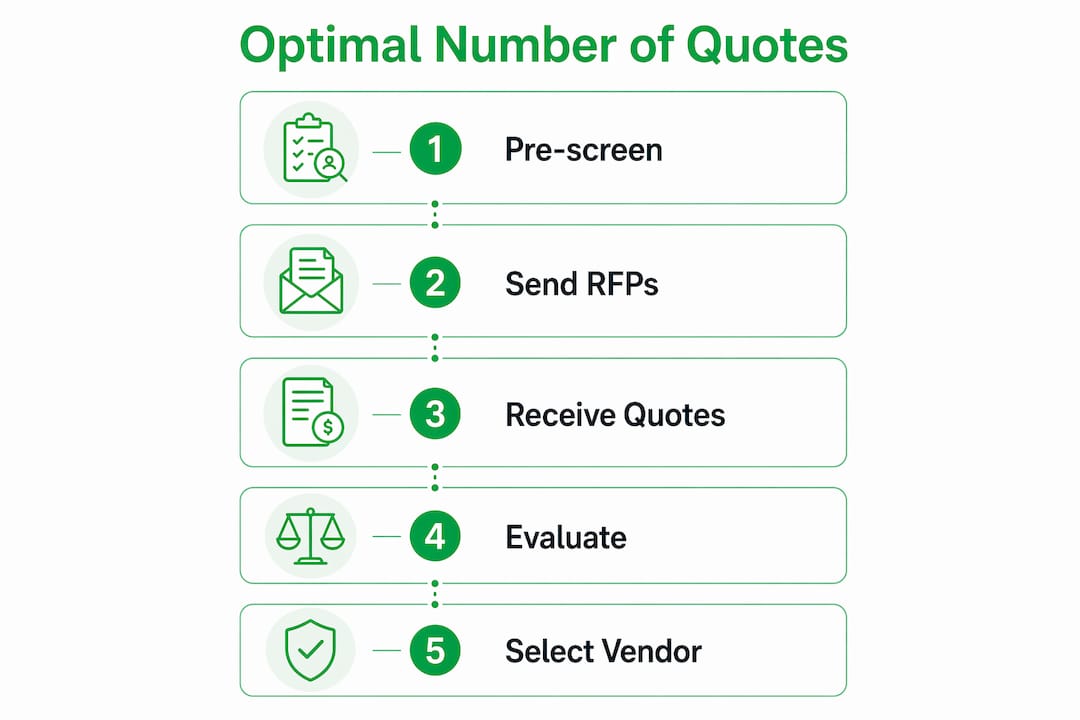
Sending RFPs to too many vendors dilutes quality and can overwhelm buyers. Vendors who sense they are one of fifteen bidders often invest less effort in their proposals. The result is a stack of generic quotes that are harder to compare, not easier.
| Vendor outreach | Quotes received | Outcome |
|---|---|---|
| 1–2 vendors | 1–2 quotes | No market benchmark; high risk of overpaying |
| 3–5 vendors | 2–4 quotes | Clear rate range; outliers visible; manageable evaluation |
| 6–8 vendors | 4–6 quotes | Thorough market view; evaluation effort increases significantly |
| 9+ vendors | 6+ quotes | Decision paralysis; vendor quality drops; relationship fatigue |
Pro Tip: Pre-screen vendors before sending a formal request. A quick phone call or portfolio review cuts your outreach list in half and improves the quality of every quote you receive.
How to compare event quotes fairly
Direct price comparison across event quotes is almost always misleading. Comparing event quotes requires normalization of scopes, meaning you adjust each proposal to a common baseline before you look at the numbers. Without that step, you are comparing different products at different prices and calling it an apples-to-apples evaluation.
Scope differences that distort price comparisons
Staffing is the most common source of scope variation. One vendor may quote four crew members for eight hours. Another quotes three crew members for ten hours. The total labor cost may be similar, but the event experience will differ. Pre-production hours create another hidden variable. Omitting or underestimating pre-production hours in quotes often leads to costly change orders during events. A quote that looks lean on paper may balloon once the vendor starts billing for planning time that was never included.
A practical normalization checklist
Before you rank quotes by price, verify that each proposal includes the same elements:
- Total staffing hours, broken down by role
- Pre-production time: planning calls, site visits, load-in, and rehearsal
- Equipment list with backup or redundancy specifications
- Travel, accommodation, or logistics costs
- Contingency or overtime provisions
Once every quote reflects the same scope, price differences become meaningful. A vendor who costs 20% more on a normalized basis may still be the right choice if their contingency planning is stronger. Event clients choose vendors based on the quality of the event plan and risk management strategies implied in the quote, not the lowest price.
Common pitfalls in quote evaluation
Incomplete bids are the most dangerous trap. A quote that omits a line item is not a cheaper option. It is an incomplete option that will generate a change order later. Watch for vague language like “staffing as required” or “equipment per event needs.” Those phrases are placeholders, not commitments. Ask every vendor to replace vague terms with specific numbers before you make a final comparison.
What psychological factors drive clients to request multiple quotes?
The decision to collect multiple quotes is not purely financial. Clients mostly request multiple quotes to reduce uncertainty, seeking confidence after feeling a gap between interest and commitment. That gap is emotional as much as it is logical. Signing a contract for a significant event feels like a point of no return, and clients want reassurance before they cross it.
Multiple quotes serve as a decision-making framework. Each proposal gives the client a new data point, and the pattern that emerges across several quotes builds confidence that they understand the market. The client is not necessarily looking for the cheapest option. They are looking for the option they can defend to themselves and, often, to a boss, a board, or a partner.
“When a client says they are getting other quotes, they are not rejecting you. They are telling you they are serious about the decision and need more information to feel certain. That is a buying signal, not a goodbye.”
Vendors who understand this dynamic respond with transparency rather than pressure. A client who feels informed and respected moves faster toward a decision than one who feels rushed. Multiple quote requests signal serious buying intent and a desire for clarity, not indecision or rejection.
The psychological drivers behind multi-quote requests include:
- Fear of overpaying: Clients want confirmation that the price is fair relative to the market.
- Fear of choosing the wrong vendor: Multiple quotes expose differences in approach, not just price.
- Accountability pressure: Clients who answer to others need evidence that they evaluated options.
- Ambiguity discomfort: A single quote leaves too many unknowns. Multiple quotes fill in the picture.
Key Takeaways
Event clients request multiple quotes because a single proposal cannot provide the comparative data needed to make a confident, well-informed decision.
| Point | Details |
|---|---|
| Price variation is normal | Quotes for the same scope can vary 30%–50% due to overhead and risk assumptions. |
| Optimal quote volume | Soliciting 5–8 vendors and receiving 2–4 quotes gives the best balance of insight and efficiency. |
| Normalize before comparing | Adjust every quote to the same scope baseline before ranking by price. |
| Low bids carry hidden risk | Bids 30%+ below market average often reflect missing insurance or licensing. |
| Psychology drives the process | Most clients seek confidence and clarity, not just the lowest number. |
The quoting process rewards transparency, not just price
I have watched clients walk away from the lowest bid more times than I can count, and the reason is almost always the same: the vendor could not explain their price. A quote is not just a number. It is a narrative about how a vendor plans to run your event, manage risk, and handle the moments that do not go according to plan.
The clients who get the most out of the multi-quote process are the ones who treat it as a conversation, not a competition. They ask vendors to explain their assumptions. They push back on vague line items. They want to understand why one vendor charges more for pre-production and whether that investment pays off on the day. Pricing transparency is a trust-building tool that frames quotes as comprehensive plans, not just financial figures.
My practical advice: go into every vendor conversation with three questions ready. Ask what is included in the price, what is not included, and what happens if something goes wrong. The answers will tell you everything the quote itself cannot. Vendors who answer those questions clearly and confidently are the ones worth hiring, regardless of where their price lands in the range.
— Robert
Structured quoting tools that support better decisions
Event clients who collect and compare multiple proposals benefit most when vendors present their quotes in a clear, consistent format. Disorganized or incomplete quotes slow down the evaluation process and create the scope confusion described throughout this article.
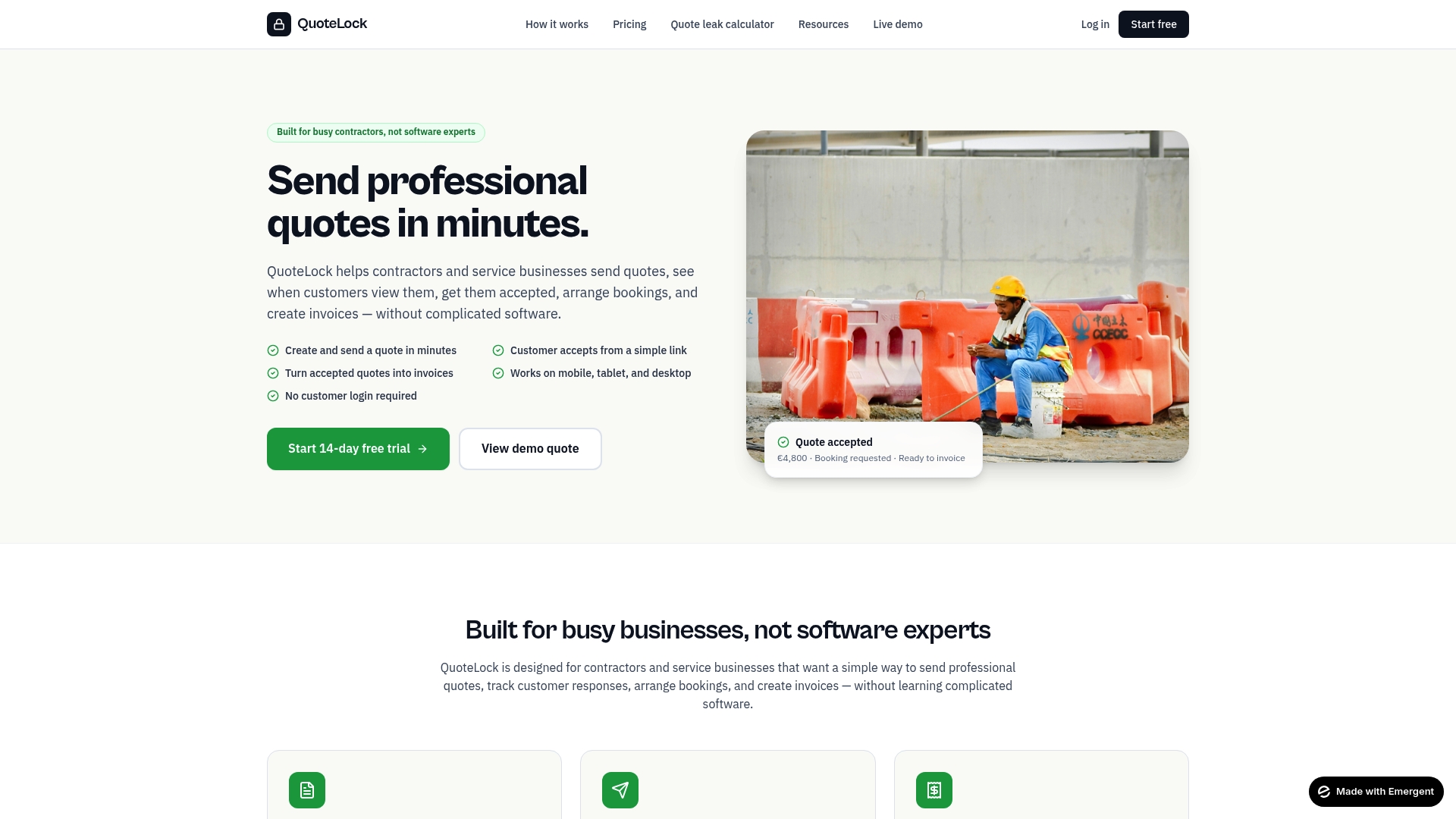
Quote-lock is built for contractors and service businesses who need to create detailed, professional quotes fast. The platform lets vendors send structured proposals in minutes, track when clients open them, and convert accepted quotes directly into invoices. For event clients, receiving a Quote-lock proposal means getting a clear breakdown of scope, labor, and costs with no ambiguity. Vendors who use structured quoting software make the comparison process easier for clients and close more jobs as a result.
FAQ
Why do event clients ask for multiple quotes?
Event clients request multiple quotes to reduce uncertainty and gain confidence before committing to a vendor. The process provides comparative data on price, scope, and risk that a single proposal cannot deliver.
How many quotes should an event client collect?
Soliciting 5–8 vendors and receiving 2–4 formal quotes gives event clients enough market insight without creating decision paralysis. Fewer than two quotes leaves no reliable benchmark.
Why do event quotes vary so much in price?
Quote variation of 30%–50% for identical scopes is normal and reflects differences in overhead, insurance, staffing models, and contingency planning. A lower price does not always mean a better deal.
What is the biggest mistake clients make when comparing event quotes?
The most common mistake is comparing prices without first normalizing scope. Differences in staffing or pre-production hours make direct price comparisons misleading unless every quote reflects the same deliverables.
Does requesting multiple quotes mean a client is not serious?
The opposite is true. Multiple quote requests signal serious buying intent and a desire for clarity. Clients who collect several proposals are further along in the decision process, not further away from it.