The Role of Decision Makers in B2B Quotes Explained

The Role of Decision Makers in B2B Quotes Explained
The role of decision makers in B2B quotes is defined by who controls budgets, evaluates solutions, and approves purchases across multiple organizational functions. B2B buying is not a solo act. Modern B2B purchases typically require consensus from 6 to 10 stakeholders, each with different priorities and veto power. That complexity means a quote sent to one contact is rarely enough to close a deal. Understanding who sits at the table, what they care about, and when they get involved is the difference between a quote that converts and one that stalls.
The industry term for this group is the buying committee. Sales professionals who map the full buying committee before sending a quote consistently reduce revision cycles and close deals faster. This article breaks down every role in that committee, explains how each one shapes the quoting process, and gives you practical strategies to engage them all.
Who are the key decision makers in B2B buying committees?
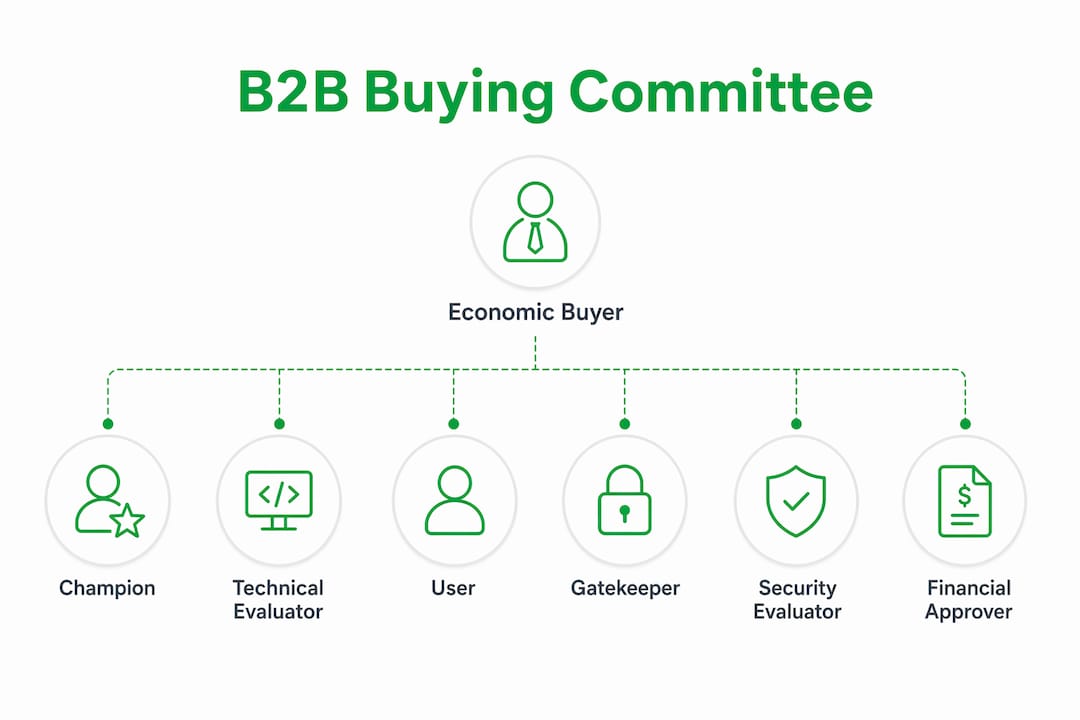
A typical B2B buying committee has seven core roles, each with distinct concerns and a specific point in the approval cycle where their influence peaks. Missing even one functional lead often creates blockers at the contract stage.
The seven roles are:
- Champion: Your internal advocate. This person believes in your solution and pushes it forward internally. They do not control the budget, but they control access and internal momentum.
- End user: The person or team who will actually use the product or service. Their feedback on usability and fit carries weight with technical buyers and procurement.
- Economic buyer: The budget owner. This role approves or rejects spend. Their primary concern is ROI and financial risk.
- Technical buyer: Evaluates whether your solution meets technical, integration, or compliance requirements. In enterprise deals, this role often belongs to IT or engineering leads.
- Procurement: Manages vendor contracts, pricing terms, and compliance with purchasing policies. Procurement rarely evaluates the solution itself but can kill a deal on contract terms alone.
- Legal: Reviews contracts for liability, data handling, and regulatory compliance. Legal involvement typically arrives late but carries hard veto power.
- Executive sponsor: A senior leader who provides organizational backing. Their involvement signals priority but rarely includes hands-on evaluation.
How company size changes the committee
The mix of these roles shifts significantly between small and mid-sized businesses and enterprise organizations. CEO involvement in buying decisions drops from 33.8% in smaller companies to 28.7% in enterprise deals. Meanwhile, CTO and technical buyer involvement rises to 77.1% at the enterprise level. That shift matters because it tells you where to focus your energy. In enterprise deals, the technical buyer often has more practical authority than the CEO.
| Role | Primary concern | Peak influence stage |
|---|---|---|
| Champion | Internal adoption and advocacy | Early and throughout |
| Economic buyer | Budget and ROI | Mid to late stage |
| Technical buyer | Fit, integration, compliance | Mid stage |
| Procurement | Contract terms and vendor policy | Late stage |
| Legal | Liability and regulatory risk | Final stage |
| Executive sponsor | Strategic alignment | Early and final sign-off |
| End user | Usability and day-to-day fit | Early evaluation |
Pro Tip: Build a one-page stakeholder map before you send any quote. List each role, the person filling it, their primary concern, and the stage where they get involved. This single document will prevent more late-stage surprises than any other preparation step.
How do decision makers influence the B2B quoting and approval process?
Budget owners, technical evaluators, and champions each apply pressure at different points in the approval cycle. Understanding that timing is as important as understanding the roles themselves.

The economic buyer controls whether a deal moves at all. Without budget approval, no quote gets signed. Their evaluation focuses on total cost, payment terms, and the financial case for the purchase. A quote that does not clearly articulate ROI will stall at this stage, regardless of how strong the technical fit is.
Technical buyers evaluate whether your solution actually works within the buyer’s existing environment. They ask about integrations, security protocols, data handling, and implementation timelines. IT and security evaluators carry hidden veto power. Raising compliance or security objections late in the process is one of the most common reasons deals collapse after a quote is accepted in principle.
“The champion gets you in the room. The economic buyer gets you the signature. But the technical buyer and legal team can quietly kill the deal before either of those conversations happen.” — B2B sales principle
The concept of the shadow veto explains why deals die after a champion says yes. Stakeholders outside your primary contact, including IT, finance, and legal, can block a deal after the champion has already approved it. This is not a rare edge case. It is a structural feature of how large organizations manage purchasing risk.
Pro Tip: Never treat a champion’s approval as a closed deal. Ask your champion directly: “Who else will need to review this before it’s finalized?” That one question surfaces shadow veto holders before they become blockers.
What common pitfalls occur when engaging decision makers in B2B quoting?
The most expensive mistake in B2B quoting is targeting the wrong person with the wrong message at the wrong time. Three patterns account for most failed quotes.
Relying on org charts instead of power maps
Org charts show reporting lines. They do not show who actually controls decisions. Power maps track informal influence and veto sources that never appear on an org chart. A procurement manager with a strong relationship with the CFO can kill a deal that the VP of Operations already approved. Power mapping identifies these shadow influencers before they become late-stage problems.
Ignoring technical and security evaluators until the final stages
Sales professionals often delay engaging IT and security teams because those conversations feel like obstacles. That delay is the mistake. Early engagement with technical requirements, compliance documentation, and security questionnaires removes the biggest source of last-minute deal kills. Bring these stakeholders in during the evaluation phase, not after the quote is sent.
Over-targeting C-suite executives
Decision-making in larger organizations occurs 2 to 3 layers below the C-suite. Functional leads and procurement teams hold the real evaluation and approval authority for most purchases. Spending your outreach budget on CEO-level contacts while ignoring the director of IT or the head of procurement is a common and costly error.
- Map all seven buying committee roles before initial outreach.
- Identify your champion early and invest in their ability to advocate internally.
- Engage technical and security evaluators during the evaluation phase, not at contract stage.
- Tailor every communication to the specific concern of each role. Procurement gets contract terms. Technical buyers get integration specs. Economic buyers get the financial case.
- Use decision complexity frameworks like the Cynefin model to match your engagement strategy to the type of decision the committee is making. Ordered decisions need clear process. Complex decisions need collaborative exploration.
How does understanding decision makers improve quoting outcomes?
Mapping the full buying committee before you build a quote changes the quality of the quote itself. Each role has a different definition of value, and a quote that speaks to all of them closes faster with fewer revisions.
The economic buyer needs a clear financial summary at the top of the quote. Total cost, payment structure, and a one-line ROI statement. The technical buyer needs a specification section that addresses integration requirements and compliance standards. Procurement needs clean contract language and a clear scope of work. Legal needs data handling terms and liability clauses addressed upfront.
Decision-making has shifted from individual leadership authority to a distributed organizational capability. That shift means no single contact can push a quote through on their own. The organizations that close B2B deals fastest are the ones that treat the buying committee as a system, not a hierarchy to climb.
Practical benefits of full committee engagement include:
- Fewer quote revisions because technical and legal requirements are captured upfront
- Faster approval cycles because procurement and legal are briefed before the final quote is sent
- Higher close rates because the economic buyer’s ROI case is built into the quote from the start
- Reduced risk of late-stage blockers because shadow veto holders are identified and engaged early
| Engagement approach | Outcome |
|---|---|
| Champion only | High stall rate at contract stage |
| Champion plus economic buyer | Faster budget approval, still vulnerable to technical veto |
| Full committee mapping | Shorter approval cycle, fewer revisions, higher close rate |
| Early technical and legal engagement | Eliminates most last-minute deal kills |
Key takeaways
The role of decision makers in B2B quotes requires engaging all seven buying committee roles, each with distinct authority, timing, and veto power, to move a quote from submission to signature.
| Point | Details |
|---|---|
| Buying committees average 6–10 stakeholders | A single contact is never enough; map every role before sending a quote. |
| Technical and legal roles carry hidden veto power | Engage IT, security, and legal early to prevent last-minute deal kills. |
| Power maps outperform org charts | Informal influence and shadow veto holders rarely appear on reporting structures. |
| Tailor quote content by role | Economic buyers need ROI; technical buyers need specs; procurement needs clean contract terms. |
| C-suite is rarely the real decision authority | In enterprise deals, functional leads and procurement hold practical approval power. |
Why I think most B2B sales teams are engaging the wrong people
After watching hundreds of B2B deals stall or collapse, the pattern is almost always the same. The sales team built a strong relationship with one person, sent a well-crafted quote, and then waited. And waited. What happened was not a pricing objection or a competitor win. It was a procurement manager who had never heard of the vendor, or a security team that raised a compliance flag no one had addressed.
The uncomfortable truth is that most B2B sales training still centers on finding the decision maker, singular. That framing is outdated. B2B decision-making is now a systemic organizational capability, not a leadership trait. Authority is distributed, and the people with the most formal power are often the least involved in day-to-day evaluation.
What actually works is treating every quote as a document that needs to serve multiple audiences simultaneously. The financial summary for the economic buyer. The technical appendix for IT. The clean scope of work for procurement. That approach takes more time upfront, but it eliminates the back-and-forth that kills deal velocity.
The other shift I have seen matter is moving away from top-down outreach. Chasing the CEO while ignoring the director of operations is a vanity strategy. The real authority in most mid-market and enterprise deals sits with functional leads who understand the operational impact of the purchase. Find them early. Speak their language. Your close rate will reflect the difference.
— Robert
Quote-lock and the reality of B2B quoting complexity
Managing quotes across multiple decision makers means your documents need to be accurate, trackable, and easy to act on. A quote that sits in someone’s inbox with no visibility is a quote at risk.
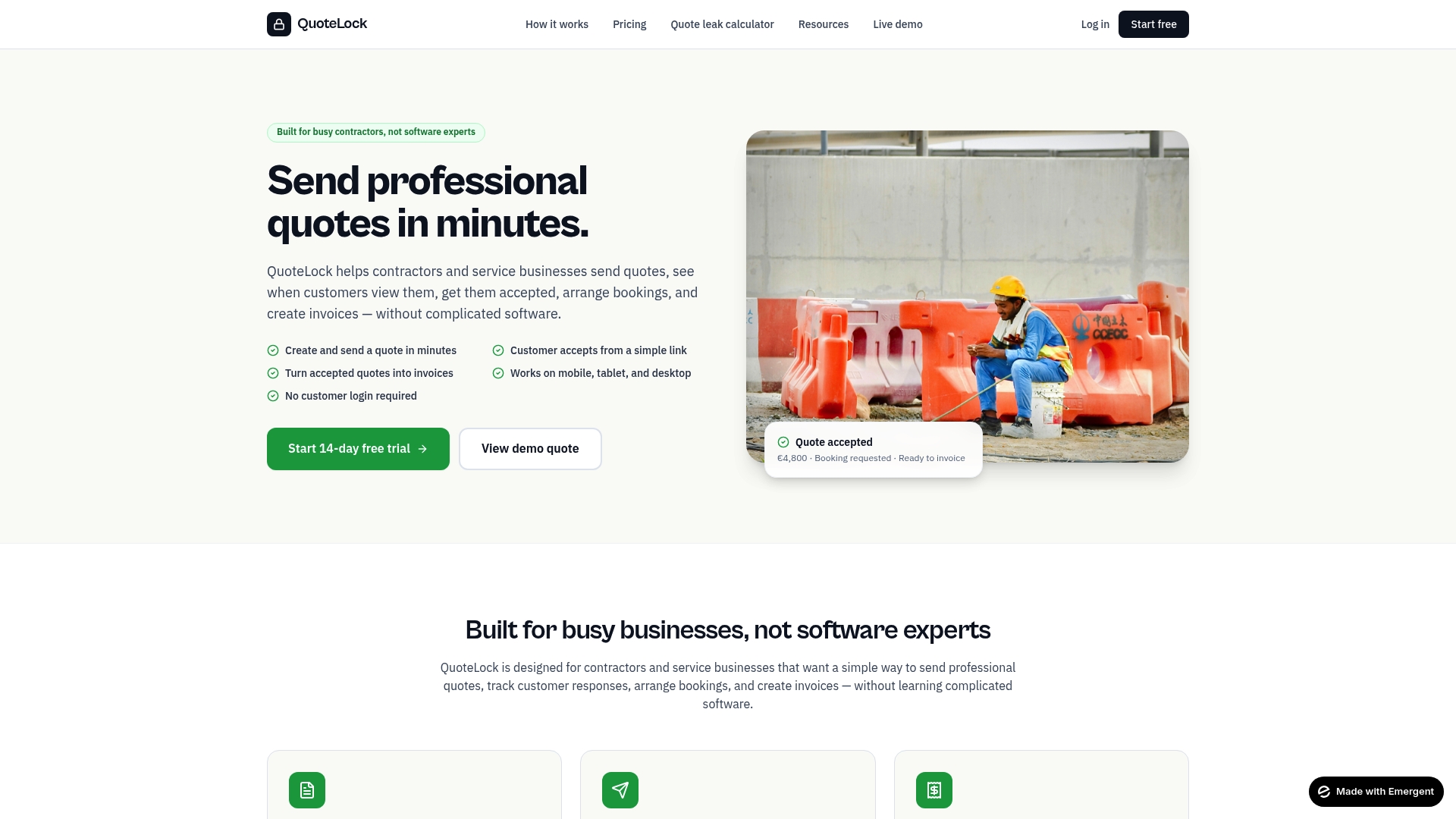
Quote-lock is built for contractors and service businesses who need to send quotes fast and know exactly what happens after they hit send. With built-in quote tracking, you can see when a quote has been viewed, send reminders to keep deals moving, and convert accepted quotes directly into invoices without re-entering a single line of data. For professionals managing complex quoting situations with multiple stakeholders reviewing the same document, that visibility is not a nice-to-have. It is how you stay in control of your pipeline without adding administrative overhead.
FAQ
What is a B2B buying committee?
A B2B buying committee is the group of stakeholders involved in approving a purchase decision. It typically includes 6 to 10 people across roles like economic buyer, technical buyer, procurement, legal, and executive sponsor.
Why do B2B quotes fail after the champion approves them?
Shadow veto holders, including IT, finance, and legal teams, can block a deal after the champion has approved it. Engaging these stakeholders before the quote is finalized prevents late-stage deal kills.
How does company size affect who makes B2B purchasing decisions?
In enterprise organizations, technical buyers and CTOs hold more decision authority, with CTO involvement reaching 77.1% of deals. CEO involvement drops as company size grows, meaning functional leads carry more practical weight.
What is a power map in B2B sales?
A power map is a visual tool that tracks informal influence, veto sources, and shadow influencers within a buying organization. It reveals decision authority that does not appear on a standard org chart.
How should a B2B quote be structured for multiple decision makers?
A well-structured B2B quote includes a financial summary for the economic buyer, a technical specification section for IT and security evaluators, and clear contract language for procurement and legal review.